Showing posts with label Exercises. Show all posts

Saturday, August 22, 2015

Time - how to convey expansion and contraction

In Visual Culture by Richard Howells and Joaquim Negreiros, the key debate in the film section is Does film just represent time or actually create it? 

"In classical film, time flows chronologically and is represented through progressions of shots that, in connecting time to sensory-motor references, represent it in a continuous fashion. Time ellipses and flashbacks add a degree of sophistication to to this representation of time, but they do not alter the essentially linear nature of movement-image progressions, designed to create spatio-temporal coherence." 

It then goes on to cite Alain Resnais' Last Year in Marienbad as a good example of a non-linear structure "characterized by the intensive use of flashbacks and time shifts that are far from obvious and that create the time ambiguity..."

Howells, R & Negreiros, J (2012) Visual Culture. Cambridge: Polity Press

There are, of course, dozens of great films which have a non-linear narrative.  Notable ones would be 21 Grams; Oldboy 2003; Pulp Fiction; Slumdog Millionaire; Kill Bill Vols 1&2; Mulholland Drive, Memento and Before the Devil Knows You'r Dead.  It is increasingly common as film professionals need to create even more impressive new work to attract audiences. Often these come in the form of 'puzzle' movies such as Donnie Darko.

One of the best films depicting the contraction of time is Synecdoche, New York (2008) - written and directed by Charlie Kaufman. This is a mind-blowing piece of work which needs to be watched several times and my attempts to explain it could not do it justice.  In one short scene, depicting a single incident which should cover a couple of days at most,  time actually progresses by six months, indicated by a radio, a newspaper, Christmas decorations and a calendar.

Another good example is the scene in Notting Hill (1999, dir Roger Michell) where the protagonist walks through the market. It is done in one take, the camera tracking Hugh Grant but he walks into Autumn rain, Winter snow, Spring and the hot overhead sun of Summer. Other visual clues include a pregnant shopper whom we see at the end with toddler and a character newly in love later seen breaking up with her boyfriend; even the produce on the market stalls changes to match the season.

Other techniques could include light moving across a room to denote the hours of the day. Pages being torn off calendar.  Hairstyles and cars are often used. In Shawshank Redemption we sense the passage of time by the changing posters on the wall of Andy's cell.

The expansion of time is more rare is this is unlikely to appeal so much to an audience. In basic terms this can simply be done through slow motion. The Matrix uses this technique to good effect.

Another technique is to shoot some action from a number of different viewpoints and repeat the playing of the incident. This can be a good narrative device if there is a complicated event occurring. A good example would be in Jackie Brown (1997, dir Quentin Tarantino) - the shopping bag exchange scene which we see three times.

Occasionally a film uses real time as a central part of the narrative - High Noon (1952, dir Fred Zinnemann) being one of the most famous examples of this.  We see a clock repeatedly to build up tremendous tension.

Graphics can be used - text on the screen; time-laps; the aging process; symbolism; montage; transitions such as jump cuts or fades and dissolves.  Colour techniques such as bleaching or filters. Split screens can also sometimes work in the case of multiple threads.


Time - connection script


Scene set in a house with contemporary decor. 

Woman is listening the radio and dressing in smart clothes. The radio clearly indicates it is morning, as does the angle of the light.

A number of her belongings are laid out on the bed, being inspected by a cat.

She packs all of the belongings into a bag and zips it up.

She turns off the radio and places a coffee mug in the sink. 

She checks the back door is locked and takes a look around the flat.

She exits via the front door.

Fade to black briefly.

The camera remains in same position.

The door opens again and she reenters the flat dumping her bag on the floor and slipping off her jacket. She sighs and runs her hand through her hair looking tired and slightly frazzled.

The flat is much darker with a slice of evening sun across the hallway.

She heads for the kitchen whilst making noises at the cat.

She pours a glass of wine and takes a gulp before leaving the kitchen.

Alternative narrative

I have chosen Tree of Life (2001, dir Terrence Malick) to study as an 'alternative narrative'. It is not that there is no narrative but Malick has allowed this to become more of a sensory experience which takes the viewer on an emotional and spiritual journey.  Instead of the images supporting the story, they are designed to trigger memories and empathy to create experiential viewing.

Not everyone enjoys this approach. Even Sean Penn who plays the adult Jack O'Brien in the film was critical of Malick: "I didn't at all find on the screen the emotion of the script, which is the most magnificent one that I've ever read. A clearer and more conventional narrative would have helped the film without, in my opinion, lessening its beauty and its impact. Frankly, I'm still trying to figure out what I'm doing there and what I was supposed to add in that context. What's more, Terry himself never managed to explain it to me clearly." (Interview in Le Figaro, August 2011)

This movie is quite autobiographical. Malick grew up in Waco, Texas where the film is set (although it was filmed in Smithville) where his father worked for an oil company but played the organ.  The director's brother Lawrence R Malick committed suicide when he was 19, the same age as the death of the brother : R.L in Tree of life. Malick's other brother died after a car crash in 2008.

Structure

Act 1 - idyllic scenes of a family home; the mother (Jessica Chastain) receives a telegram to say her child has died; she tells her husband (Brad Pitt); there are scenes of grief and cold comfort from grandmother. Some flashbacks to show the boy played guitar. Adult Jack (Sean Penn) lights a votive candle and has a phonecall with his father; mumbles about his brother; scenes in a very modern glass building where Penn seems to be an unhappy architect; some dream sequences of desert and a murmuration.

Act 2 - creation sequence - a journey through time and space evolution. Nature and grace seem to be hand in hand here.

Act 3 - 1950s Texas where we see the family begin and grow up; the father is a disciplinarian, the mother is soft and forgiving; the boys do boy things and then get a bit wilder, get into trouble, go through growing pains; we see Jack as a troubled boy who doesn't get along too well with his Dad; things go wrong with Dad's job and he admits he had the wrong priorities and he was hard on the kids.  There is some resolution here.

Act 4 - Adult Jack is wandering around the desert; more impressionistic sequences; whole family on the beach; Jack kneels at his mother's feet. The final line is "I give you my son".

Cinematography

Malick called upon Douglas Trumbull, responsible for the special effects in 2001: Space Odyssey to create many of the visuals and he seems to have successfully captured Malick's ideas and vision.

Malick wanted the interior spaces to be unlighted, so three houses were used in the main story, depending on the time of day and the position of the sun. The sun is always visible shining through the windows.  Lots of use of light and dark 

There were lots of very high angles (eg when Mr O'Brien is walking along metal ladder corridors at his job to show scale) and low angles to show the POV of the kids revelling in nature.

Book of Job theme

The Book of Job is featured heavily as part of the theme of Tree of Life - to the detail of Jack O'Brien's initials as well as being the epigraph for the movie. 

"Where were you when I laid the foundations of the Earth, when the morning stars sang together, and all the sons of God shouted for joy?" Job 38:4,7

We hear the mother whisper - presumably to her God - "What are we to you?"  and the father later rages that  he didn't acknowledge the glory.  "I wanted to be loved because I was great; A big man. I'm nothing. Look at the glory around us; trees, birds. I lived in shame. I dishonored it all, and didn't notice the glory. I'm a foolish man."

Mrs O'Brien: "The nuns taught us there were two ways through life - the way of nature and the way of grace. You have to choose which one you'll follow." ["Grace" and "Nature" are whispered at the start of the film.]

As voiceover: "Lord, Why? Where were you? Did you know what happened? Do you care?"

Mother

The mother epitomises forgiveness, softness, light. She urges her boys: "Help each other. Love everyone. Every leaf. Every ray of light. Forgive." She's playful - in one scene, she wakes them up by pressing ice cubes to their skin.  Several scenes are filmed with the camera following her from behind, as if she is leading the boys through life.

Father

Some reviews describe him as being almost brutal but his character almost certainly reflects how a father would have behaved at that time.  This is where life and art becomes rather cliched - that father wants to be respected and successful, fails in his job through no fault of his own and life changes for the family.  At times he takes the discipline too far and the children are clearly scared of him but he is not abusive by the standards of the time.  He is also very playful with them - making shadow puppets and drawing on their faces.

Impressionistic sequences 

There is too much to cover here but some of the things that stood out for me were how well Malick recreated the sense of long, hot childhood summers. Surely every viewer could relate to something here?  Butterflies, frogs, Halloween, reading stories by torchlight, sprinklers in gardens, climbing trees, kicking cans, playing in long grass, staring at weird adults, falling in love with classmates, firecrackers, peer pressure, breaking windows, roughhousing with brothers. And they always seemed to be surrounded by dogs.  

Roger Ebert described this beautifully as "where life flows in and out through open windows".  http://www.rogerebert.com/reviews/the-tree-of-life-2011

The creation segments are gorgeous and epic. Much of the space imagery looks like rich baroque paintings. We see galaxies, nebulae, lava, waterfalls, cells, amoeba, DNA, jellyfish, seaweed, calm and beautiful dinosaurs, hammerhead sharks, giant manta rays, the eye of a foetus, the asteroid hitting the Yucatan peninsula.  The music and whispers and soundscapes make for a magical experience if the viewer is will to immerse themselves.

My response

This film definitely did not bore or irritate me as it seems to have done with many filmgoers.  I enjoyed the sensory experience throughout and I was definitely taken on emotional journey. I wonder if the sense of devastation of the brother dying would have been more powerful if we had seen the boys together more before we hear the news that he is dead?

Malick really succeeds in evoking the wonders of childhood and how hard it is to grow up. When you are young your family and friends are everything so small things seem unsurmountable and we really feel this through young Jack.

The impressionistic sequences elevate this from being a straight story of the mundane trials and tribulations of a family growing old together who suffer a bereavement.  This allows us as viewers to participate and explore our greater feelings about the world and why we are here and how we should behave. 

Many things puzzled me, of course ... the doorway in the desert that adult Jack (Sean Penn) walks through in his sharp suit; the lost souls wandering around on the beach; what sparked adult Jack's specific angst and sadness at that moment (an anniversary of RL's death?); what were memories, what were dreams and what was imagination (eg the tall creepy man in the attic)?; how did he finally achieve happiness and resolution? ...

There are so many things explored in this film which connect us humans and I found it to be a wonderful lyrical experience. Malick took a very simple premise - ordinary family relationships - and made something truly magical.  I can understand why people were frustrated by some of the apparently 'arty' bits but I am sure every single thing meant something to Malick and his teams and was included the final cut to help take us on the journey.


My attempts to summarise the 'narrative' in a diagram...


Saturday, August 15, 2015

Documentary narratives

I have to declare I have not a been big watcher of documentaries - I generally (wrongly) think of them as being dull or too harrowing for me to enjoy so this will be a steep learning curve for me.

From what I have seen, documentaries, like fiction, also often have a basic three-act narrative: the set up (tease), the main action, the conclusion with an indication of how the characters have been changed.

Interesting examples of documentaries (from my limited experience) are:

Blackfish (2013) - this is definitely a "telling" documentary. It is the story of Tilikum, a bull orca in Sea World. It uses interviews of former employees and TV and film footage to enlighten us about the realities of animals kept in captivity for our entertainment. It also tackles corporate conspiracy.  The film succeeds in making us feel desperately sad for Tilikum, whilst fearing him.  There are some chilling moments that stay with the viewer for a long time.  It achieved its goal of convincing me to join in the lobby against this treatment of orcas or other sea life.  Lots of perspectives are presented but there is no real objectivity and it is the powerful subject matter which makes this work rather than anything innovative about the narrative.

Searching for Sugarman (2012) - I *think* this is an "asking" doc but there is a lot of controversy about this so I may have just been played!  If it were true, the reveal in the narrative would be genius. Even if it is not entirely accurate, it makes for a very engaging drama. It does raise questions over how truthful documentary film makers should be. Some critics have called it "myth-making".

20,000 Days on Earth (2014) - an incredibly engaging biopic about Nick Cave.  It feels like a movie but reveals a lot about how Cave works and collaborates.

Beware of Mr Baker (2012) - an excellent film about Ginger Baker which combines old footage with interviews and even brings in animation to illustrate the story.  It is extremely well crafted, bringing in themes very cleverly and mixing a range of media approaches.


Pina (2011) - a brilliant film about Pina Bausch by Wim Wenders. We hear from her proteges and colleagues. Live footage of them sitting in front of the camera and moving but not speaking - that is delivered by voiceover. A very classy technique.  Some surreal arty moments throughout make it fascinating and engaging.  We get a strong sense of Pina's unique approach, unfettered creativity and her inclusiveness. I find dance to be mystifying and a rather 'up itself' but was still very inspired by this.

Abstract image sequence

This exercise required that I find a short musical sequence, listen to it several times whilst recording emotions and feelings and images that came to mind.

I chose the beginning of a piece by a friend, Pascal Fricke. He called it Conversations but I tried not to think about that, at first, and then actually found that was not really what came to mind for me.

Initially I expected to find the music to evoke sad imagery but i found myself thinking of warmth and safety and family. There are some little 'edgy' moments, just like in life , and in my sequence, I have tried to channel a bit of Terrence Malick's Tree of Life.  With my fire imagery, I could imagine some whispering over the top, people talking to their gods.

I chopped up this up a lot to time some of the fire bursts with the music but did not want to overdo this as I felt it could get comical and spoil the mood. This can work well as we saw in Beware Mr Baker when drum beats were matched with explosions from WW2 footage but that had a very different feel throughout.

This abstract work excites me and I would like to experiment more.


De-editing a sequence

For this exercise, I chose the iconic crop dusting scene from North by Northwest (1959).  Hitchcock is often considered to be one of the greatest film editors.  He prepared complex and precise storyboards for every scene and is said to have approached his work as if he were a composer writing down musical notes.

In this scene, Thornhill (Cary Grant) has been misidentified as a government agent called Kaplan, is abducted and implicated in a murder.  He goes to meet Kaplan to establish his innocence and is waiting at the designated location.

Having analysed this scene in great detail , I would say that he rhythm of the cuts does not change greatly but does allow us time to regroup after some of the dramatic moments. Lots happens within each shot so it is still quite suspenseful whilst showing the agony for Thornhill as he fears for his life.

We have some very short cuts (less than 2 second shots) where Grant is reacting to the impending threats from the plane and also when he flagging down the truck:

  • Long shot, low angle, Thornhill in road, truck approaching (1.5 secs)
  • ELS, plane banking over corn (2 secs)
  • MS, T trying to stop truck, sound of horn and brakes (2 secs)
  • LS, truck approaching (2 secs)
  • MS, T looks up and back at plane (1.5 secs)
  • LS, truck getting closer (1 sec)
  • MS, T waving frantically (1 sec)
  • CU of truck grille, sound of brakes (1 sec)
  • CU of T looking very alarmed (1 sec)
  • CU with hands over face as head drops (1 sec)
  • LS as T falls under truck (1 sec)
  • MS, side view of T under truck (2.5 secs)


The longest shots are where he is running towards the camera being chased by the plane and when he feels safe in the corn and allows himself a smile.

The composition of the shots is mostly quite simple. Lots of blue sky so we can grasp a sense of the space the plane inhabits; long perspectives of the road and fences and the cornfields. The corn is dried up and inhospitable. The whole scene is held together by the genius of Cary Grant who can show emotion so well, without speaking, so we are gripped by the inexplicable terror of the plane attack.  We need to understand the isolation of the area and how alone is our hero, which is well achieved by the composition.

The motivation for the cuts is largely to show the ‘battle’ between Thornhill and the cropduster. We need to follow the action and progress of both. We can allow for the slightly different pacing of the late 50s but this scene is still pretty tight.

I have managed to knock out quite a lot of time and make it punchier but it loses some of the painful anticipation and suspense of the scene.  The style at that time was much more explicit in terms of showing direct human reactions to events.  It would have been good film grammar to show the protagonist looking, then showing what he was looking at, then going back to the actor before the next action happens.

When I de-edited, I found it to be very interesting how cutting one part out leads to another seeming to be superfluous and suddenly whole chunks are removed!  Reminds me of pruning a hedge and it ending up quite bald.  The scene still makes sense but it would never have held its legendary and iconic status as it is now devoid of Grant’s angst.

I removed the part where we see him realize that he is not safe in the corn (after his satisfied half-smile) and that the plane is about to release dust. It is not essential as we understand what is happening but the viewer has not had chance to catch and grasp the emotion of the scene before the next bit of action happens.  However, when Thornhill spots the truck is it necessary for us to see him look back and up at the plane? We know it is there and is not giving up so this seems OK to cut. But then in a way it is as if Thornhill is taking a moment, a gulp, before he makes a run for it so it probably is worth the few seconds of extra time to maintain empathy from the audience.

The removal of the smiling shot, and some other cuts, makes the whole scene much faster and in some ways more dramatic but, as viewers, we have no time to get into the psychological drama of the events.

This was a fantastic exercise and I really think it should be included much earlier in the course. It is much more intense and enlightening to actually play with the edit rather than just analyse shots.  Everything can be slowed down to the point where you can see the fraction of the second when a front view switches to the side etc. I would love to have time to do this with lots of other well-known and brilliant scenes.

I reduced a 03.31.11 long sequence to 01.58.04, removing 94.07 seconds of footage.

The sequence still conveys all the information that it needs to. It just feels more ‘action/adventure’ rather than psychological drama because much of Grant’s emotional revelations have been reduced or removed.


Saturday, July 25, 2015

Other narratives

I have found dozens, of examples of other narrative structures from the last few decades. 

In some cases the structure defines the movie - as is the case in the iconic Memento - in others it is used as a device to make the story more interesting. This is often useful if a lot of ground is being covered - a way of avoiding a sense of a gigantic boring epic.  This approach also allows some twists and turns in the plot to keep us gripped. In other cases, it is necessary in order to lead the audience into the right state of mind to really comprehend what the director is trying to say - a good example of this would be Tree of Life.  The director Malick has created a dreamy odyssey in which we follow a boy's journey to manhood, charting his loss of innocence, through to his renewed love of the world.  This film, which I loved, is only rated 6.7/10 on IMDB and is often dismissed as 'pretentious' and 'pseudo-intellectual' I suspect partly due to the narrative structure.

Non-linear often allows for unexpected revelations which can add emotional depth. It can be playful and also 'jittery' to convey a sense of chaos.  This approach is often used in films which tackle memory and self-reflection, giving a feeling of how fleeting things can be and how haunting.  Kaufman is brilliant at this, allowing multiple manifestations of reality to be explored in a way which is really enthralling for audiences.  He can make very 'ordinary' subject matter seem surreal and intriguing and, in the process, he takes us on a journey of enlightenment.

Films worth mentioning...

L'appartement (1996) - summed up very nicely here: http://www.filmsdefrance.com/film-review/L_Appartement_1996.html

The Usual Suspects (1995) - uses flashbacks and exposition to create high drama and an unpredictable and thrilling conclusion.

Pulp Fiction (1994) - a superb use of non-linear narrative to unravel a complicated plot and tell the story from a variety of character's perspectives. The twists and turns and cause-and-effect elements make this extremely engaging and exciting for the viewer.  It is also interesting to apply Propp's Character Theory to this movie and really consider who is the hero?

Short Cuts (1993) - this similarly interweaves several stories and subtly connects a number of people who are themselves rather disconnected from their communities or their loved ones.  

Irréversible (2002) - watching the events in reverse order amplifies the tragedy of this story and also allows the director to manipulate our moral judgement. The film is almost unbearably powerful and could not have worked if told chronologically.

Donnie Darko (2001) - has an alternative timeline which muddles dreams and reality and leaves the story completely open to interpretation, not a comfortable feeling!

21 Grams (2003) - the film reveals various time frames for the three main characters in a non-chronological order. Roger Ebert questioned if this was necessary for this movie: http://www.rogerebert.com/reviews/21-grams-2003 "I felt as if an unnecessary screen of technique had been placed between the story and the audience."

I am going to finish here because there are 42 other movies on my list and this might go on forever...


Traditional narratives

Clearly many movies have traditional three act narratives but, these days, with lots of subplots and tie-ins. I chose what I thought would be a simple rom-com - Crazy Stupid Love - to illustrate this point and actually found it to be quite complex with there being several elements at play all at once.  It is useful to analyse this by identifying the emotions involved in order to spot the key moments of drama.


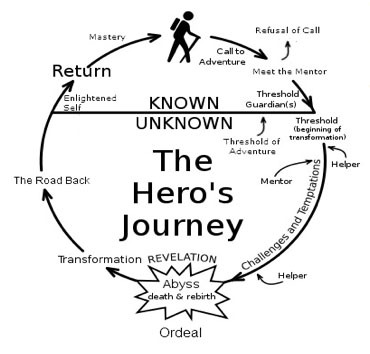
Often films have the scene-setting stage, followed by ascending action, some sort of climax or confrontation or disaster and then a resolution and conclusion.  There will be incidents along the way to trigger various plot elements and usually the characters go through some sort of transformation.

There are great diagrams on the internet to show how narratives can be mapped out - often in the forms of graphs or flow charts.  I found it easier to try something that looked more like a mind map but this encourages the inclusion of too much detail really.

This is a superb diagram of this type of structure: 

http://media.tumblr.com/a1edcbbe45605680a6ce92a59978f090/tumblr_inline_mykv874hgT1qbqzu5.jpg

I've found that when I am trying to come up with narrative ideas, this is all fairly instinctive as we have got used to it in books, films and plays.  It is still a good idea to test this though as otherwise the work may fall flat.

Sunday, April 27, 2014

Repeating the Mosjukhin Experiment

I had never heard of this experiment before starting the course and it has been intriguing me ever since.  The idea came from the Russian formalists who pioneered the concept of montage. Abstract images are given new meaning by the connection of shots.  Kuleshov and Pudovkin cut images of soup, a child in a coffin and semi-naked woman over the face of one of Russia's more well-known actors.  

This is the original and the dude really does look like he is acting his heart out - the heavy breathing, the intense expression in his eyes...

Or maybe this was the original?

Here's Hitch showing it (a bit) more recently:  


Matt and some lovely friends and I played around this this last weekend. I quickly learned that unless the actor is looking face on at the camera (which I will try next time), the sight lines and look room are crucial. The grading and lighting also make a difference.

The first few attempts proved that the 'object' sequences need to look like they are completely different (ie a flashback or imagination) or very similar, in terms of location and light and interaction with the camera.

The version below still didn't quite work. It would be better without the cat sequence as that is too bright and would not be as likely to emote a response from the 'subject'.

It seems like very powerful cut-aways are necessary in a short sequence to ensure impact.


Saturday, March 22, 2014

Exercise: Creating a new soundtrack

Man alive, this was fun! I took the sounds recorded for the listening exercise and added them to the Alcoholic sequence back in the heady days of Project 2.  I had originally detached all the sound files from the sequence but I found I had to add back in the coughing bit as this is prominent.  

The other soundscapes were birdsong, a car in a nearby street, the sound of sawing and an angle grinder from a garage.

I like how these worked to symbolise a hangover or the feeling of fear and lack of control. I used four layers in the end. I heightened some bits to intensify the effect and had to be careful to keep them below the 0 dB level.


I think the birdsong running throughout acts effectively as an 'atmos'. [An atmos is described in the course notes as the sound of silence on set or location. A room full of people sounds different to an empty room even if they are silent. There are always extraneous noises in any location. Record some minutes of silence to give options to fill gaps in dialogue - can also play with the level and quality of the background atmosphere in post production.]


Exercise: Listening

This exercise suggests going to somewhere very quiet (always tricky in London) and thinking about what can still be heard. I spent some time thinking about the sounds to disassociate them from the object that made it.

I would recommend the movie Berberian Sound Studio (dir Peter Strickland, 2012) for anyone thinking about this - it is about an English sound engineer, Gilderoy, (played by Toby Jones) working in an Italian Giallo studio. He has to create sound effects to match the action on the screens in front of him (which fortunately we never see). We watch Gilderoy, pale with disgust, stabbing cabbages and ripping stalks from vegetables to create sounds of hair being ripped from a woman's scalp etc. 

Having recorded some of the ambient noises within earshot, I tried to use other sensations to describe the sounds:


  • Flavour/smell (thinking like a wine taster)
  • Colour
  • Emotion
  • Physical texture


Bird song
Sharp; pointy; happy
Jewelled; citrus; sweet; tangy
Undulating texture
Festooned; yellow-green; lime
Fresh

The fridge
Grey; octagon
Salty; ocean smell
Tense/boring
Rough

Car engine on nearby street
Linear shapes
Bland
Metal-smell
Industrial
Anticipation
White

Kitchen noises (someone unloading a dishwasher)
Fractal
Spicy; chilli peppers
Uncertainty
Firm; unyielding texture
Blue light
Petrol fumes

Angle grinder in workshop next door
Zig zag shape
Parmesan taste
Industry
Silver
Sawdust smell

Sounding of a power sander
Orange
Pointy mesh
Zest
Hot oil smell
Anxiety

It was interesting to see from other student comments that some similar themes come up (sound of a beach and the taste of parmesan!)

Exercise: Atmosphere

I have played around with a few ideas here and will continue to do so throughout the course. It is quite time-consuming though and I am anxious to keep moving forward, so will restrict this post to "Oh what a beautiful morning".  

The key thing I wanted to capture was a lovely bright morning with that pregnant sense of anticipation of all that they day may bring. At the weekends, I usually go into to the garden first thing to soak up those quiet moments and I think this segment works quite well here:


The soft focus on the water was to convey that early morning sleepiness, water to associate with showering and getting ready for the day. The plastic heart with wings was to include some enthusiasm and energy, contrasted with the slow sway of the clothes on the line and the gentle breeze shown in the foliage shadows on the newspaper.

If time, budget and equipment were no issue, I would love to capture London waking up. I always enjoy the buzz around the markets and shops opening as I walk to work. Similarly, all the street sweepers in Havana clean the squares immaculately while it is still cool and empty, the calm before the storm.

I have looked at the great work of some of the other students and found it inspiring, as always. 

I particularly like this one: https://www.youtube.com/watch?v=1yKMsswAgbU#t=35
The shadows work so well to create tension and anxiety.

My mantra at the moment is just to keep practising and experimenting.

It is very clear that lighting is absolutely essential - as with all photography. I need to be vigilant about what light is available and what I can add/subtract/reflect and I must be as creative as possible to make that work to achieve the required atmosphere.

Saturday, November 16, 2013

Exercise: Composition & balance


This exercise is all about balance and continuity between shots. When this is broken it can work well to create a change of pace, atmosphere, add or remove tension or to communicate something about the state of mind of a character. I think I have a pretty good grasp on this from my still photography experience and also my recent experiments with the moving image but I have found a few examples of composition and balance from Breaking Bad (which I am missing badly).  There are many breaks in the continuity of this part of the episode to create the tension. There are also some long heavy parts where we are given time to contemplate the drama as it unfolds.


This is a point in the sequence where Walt realises something important which is pivotal to the plot. Although he has been centred, the sunflash adds some balance but still leaves the composition as quite uncomfortable to reflect Walt's discomfort.

Classic use of the rule of thirds with the figure in the foreground weighting down the empty space towards the bottom of the image and the centred character being the one moving across the set. This allows the viewer to take in a lot of information with any distractions.

A brave shot - like much of the cinematography in this show. We can barely see Walt as he is numbed with the reality of what has happened but he is centred because he is the pivot of everything.


A superb shot showing Walt twice - one reflection with the bullet hole in his head - to remind us that we still don't know how this will end. These dramatic and unusual changes in the composition and continuity keep us on edge and build the feeling of voyeurism. We almost feel like we are next to the car, hiding, looking everywhere as there is such danger.


In the preceding shots we have seen Walt walking in the desert and then the Native American watching the approach from his home and coming outside to interact. This shot is from a higher angle and has a much more symbolic feel to it. The fence and straggly tree between these two people accentuates Walt's remoteness, that somehow there is no going back to normality even though he is in 'civilisation' again. 


An incredibly tense scene between the two sisters. The set up feels very stagnant at first sight. The corporate or institutional feel of the office design; they are facing each other and we see then squarely in profile. Fairly muted colours apart from the purple orchid.  Commentators have said that purple in the series usually indicates someone is being misled or is delusional.  For a while nothing much happens - and then Marie confronts Skyler. 


Added tension is created in this already excruciating scene by the camera "jumping the line" across the safe 180 degree arc. This reverses the pre-established direction of the gaze between the two women which accentuates the battle of wills between them. We only see Skyler's purple sleeve from the other side.


Powerful use of the rule of thirds. Walt is down on the bottom left of the image, tiny, powerless and weighed down by events.  He is framed by two trees showing that he is hemmed in and, behind, the design on the embankment looks like gravestones.  The viewer is allowed to gaze at this still, quiet moment to contemplate Walter's fate.  

Saturday, September 21, 2013

Exercise: Images with Depth


This exercise asks us to create images to represent various atmospheres:
  • Dynamic/exciting/adventurous
  • Oppressive/dull/stifling
  • Complicated/confusing/uncomfortable
  • Refined/mature/reasonable.
Consider lines of perspective, foreground and background detail, lighting, colour, texture and depth of field....


Quite dynamic, exciting and adventurous even though the depth is not that apparent - there are some jaunty angles of the buildings and nooks and crannies to add interest. The sporty cyclist and vibrant colours add something.


Two traffic images for the oppressive/dull/stifling mood.  The angle of the shot shows depth as the lines of the cars lead the eye back but there is no comfortable space so it feels stifling (to me anyway).


The mundanity of the traffic jam also adds to the oppressiveness.


Obviously the hole in the stone naturally invites us to look through and see the world from that perspective so it gives a strange sense of depth. The layers of the landscape, shapes and colours also help.


The lines all leading to a vanishing point creates a feeling of dynamism and this is enhanced by the subject matter - all those bicycles just waiting to go somewhere.


The light and shade works well in this as we can't see any sky.  This highlights the white at the vanishing point and is balanced by the white writing on the road.  The repetitiveness of the bike parts add a nice rhythm. 


The playground shots were an experiment to see how the different lines would work but I think the overriding feeling is of being imprisoned - inevitable as there are bars up close.


Definitely complicated/confusing/uncomfortable!


It is much easier to feel the sense of depth from this image taken between the bars of the fence.


Lovely lines in the grass path leading us towards the distant building.  The softness of the path and green colour make this look very welcoming.


I thought these images would be a good fit for the oppressive/dull/stifling brief but looking at them now I am feeling more dynamic/exciting/adventurous.


Refined/mature/reasonable - nice warm colours and comfortable lines. A well-thought out space that is carefully looked after.

Logically the horizontal layers of the stones should indicate depth but this image actual feels more stifling as we cannot really see the space even though we know it is there.


Another refined/mature/reasonable image. We know what we are looking at; the path leads comfortable ahead; the area is well-tended.


I love the sense of controlled depth in this shot, leading to a small rectangle at the end. It feels comfortable and ordered.


This one is a little more sinister and threatening - could be creepier than the other graveyard images.


Dynamic/exciting/adventurous - interesting lines and lots of activity plus the street fair feel from the bunting.


I failed to capture the sense of depth in this image possibly because the patch of grass breaks up the lines of perspective and the tree blocks any possible vanishing point.


This has a nice refined/mature/reasonable feel to it even with the slightly eccentric contours of the grass. Nice lines and sold respectable buildings. And huge depth not often found in central London.


I find this to be dynamic/exciting/adventurous - partly just the recklessness of being outdoors in such heavy rain but also the reflections and colour add to the scene.


Overall this was a surprisingly interesting exercise. At first I was completely stumped and couldn't work out how I could create the images but once I got out and about I started seeing ideas in lots of places. This will really help when I need to build a scene from scratch.

From these images it seems that the best way to create depth is with clear foreground and strong lines of perspective.

I think visual depth is really important to the overall feel of a shot as it will seem deliberately claustrophobic otherwise. Our actors also need space to move around and interact and we want the viewer to feel comfortable that this can happen realistically.